Enhancing offshore safety: The role of advanced lifting tools

The critical importance of safety in offshore environments
Safety is paramount in any workplace, but it becomes even more critical in high-risk environments such as the offshore industry. Whether in renewables or oil and gas, operations at sea involve complex logistics, harsh conditions, and heavy equipment handling – all of which elevate the risk to personnel.
Safety evolution in offshore: from tragedy to transformation
The offshore industry has learned important lessons over time, with some of the most significant safety advancements following incidents like the Piper Alpha disaster in 1988. The Cullen Report led to the introduction of the Safety Case Regime, placing responsibility on operators to actively manage and mitigate risks.
Since then, the industry has embraced mandatory training, real-time monitoring, and advanced inspection technologies to protect workers. These systems remain essential as the offshore renewables sector continues to grow.
Risks unique to offshore lifting operations
Offshore lifting carries inherent dangers, including dropped objects, human error, and dynamically loaded systems. These risks are amplified by rough seas, constrained workspaces, and heavy equipment. Advanced lifting tools play a critical role in minimizing these risks, reducing manual handling, and improving operational efficiency.
The Rocksteady® quick-connect lifting tool: safety meets efficiency
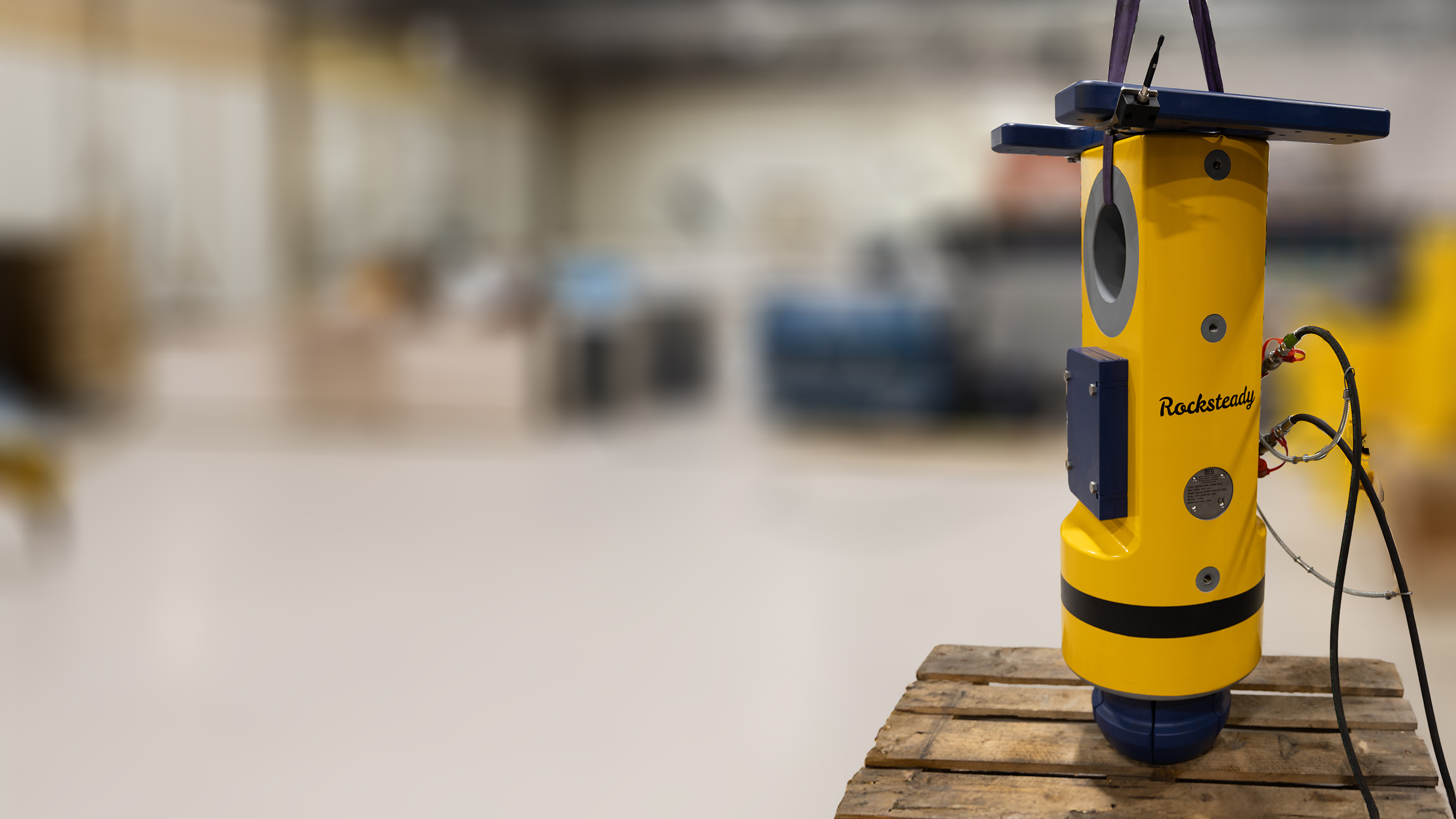
Our Rocksteady® quick-connect lifting tool is a standout innovation, designed to make heavy lifting safer, faster, and smarter. It features a fail-safe, visually verifiable locking mechanism, drastically cutting sling-handling time and reducing exposure in hazardous zones.
Key benefits of the Rocksteady® lifting tool:
- Fail-safe locking mechanism
Secures loads even during total power loss, with clear visual indicators to ensure safety. - Speed and efficiency
Enables payloads to be disconnected and reconnected in seconds, saving hours of rigging time and minimising personnel exposure. - Operational flexibility and reliability
Offers multiple receptacle options, low part count, and easy maintenance, ensuring consistent uptime. - Clear safety confirmation
Prevents partial locking; visual indicators make safety immediately verifiable, reducing human error.
Proven offshore success
Rocksteady® tool isn’t just theoretical; it’s field-proven. For example, in a gas field development off Western Australia, the Rocksteady® RSL 500 heavy lift tool with hydraulic operation and radio remote lock confirmation enabled safe, efficient lifting of pile top drilling rigs high above deck.
The future of offshore safety with AI
Looking ahead, we anticipate that artificial intelligence (AI) will elevate safety further. Future innovations may include:
- Crane targeting assistance using augmented camera feeds for precise tool placement
- Predictive maintenance to forecast equipment failure before incidents occur
- Real-time monitoring for live feedback on tool and load status
- Remote operation reducing or removing personnel exposure from hazardous zones
Efficiency and cost savings beyond safety
Advanced lifting tools like Rocksteady® also deliver business value. They slash the time and manpower needed for lifting tasks, reducing operational costs, boosting project efficiency, and lowering the chance of human error.
Conclusion: smart tools for safer offshore lifting
Safety at sea demands innovation. Tools like the Rocksteady® quick connector ensure that offshore lifting operations are not just safer, but quicker and smarter too. As we continue to integrate AI and smart systems, the vision of a safer, more efficient offshore future becomes increasingly achievable.
Related articles
Discover other thought-leadership articles from our experts
Blogs
Why today’s offshore wind foundations demand more than power
Blogs
Building momentum: How foundation innovation is unlocking gigawatt-scale offshore wind
Blogs
Engineering offshore resilience: Designing for adaptability and efficiency
Speak to our team
Our team of experts will design a solution that fits the technical, environmental and commercial demands of offshore projects.