Poland’s offshore wind potential: Navigating policies, local sourcing and energy independence
The Polish offshore wind market holds significant importance for renewable energy development. As it gains momentum, we explore the policies and government targets that are shaping the industry’s future in the Baltic region. Local sourcing of materials, services and workers can play a critical role in ensuring the success of this prominent market. By fostering collaboration among stakeholders, attracting leading technology providers and promoting sustainable practices, Poland is well-positioned to become a key player in the global transition to cleaner energy sources.
MARKET POTENTIAL
Poland’s estimated offshore wind potential is 28 GW by 2050, making it the largest market in the Baltic Sea. This offers a substantial opportunity for clean energy generation and contributes significantly to the country’s climate goals.
Energy security is paramount for any nation, and offshore wind provides a reliable source of electricity. By harnessing wind power, Poland can reduce its reliance on fossil fuels, mitigate greenhouse gas emissions and enhance its energy independence.
The new Polish government, which came to power in late 2023, recognises the development of offshore wind as a strategic component of the ongoing transformation of the country’s legacy energy system. This underscores its importance in Poland’s energy landscape. By acknowledging offshore wind’s potential, the Government signals its commitment to sustainable energy sources and environmental stewardship. This creates a conducive environment for investment, innovation and collaboration within the offshore wind sector.
LOCAL SOURCING AND JOBS
The “Polish Offshore Wind Sector Deal” aims to maximise local content in supply chains. Specifically, the deal sets a target: by 2030, at least 45% of the value generated during installation and operation stages should come from local production. This includes components, services and workforce. By maximising local content, Poland aims to strengthen its domestic supply chain, create economic opportunities and enhance local participation in offshore wind projects.
It is projected that an average of 28 GW will be installed annually, marking a sevenfold increase compared to the previous decade. Most of these projects will utilise a new generation of 12 MW+ turbines, supported by larger and heavier foundations. Consequently, this will necessitate the use of larger installation vessels, as well as more powerful drills and hammers.
Benefits and challenges
- Benefits: Maximising local content fosters job creation, skills development and technology transfer. It also reduces reliance on imports and promotes sustainable growth.
- Challenges: Achieving this target requires collaboration among stakeholders, investment in local manufacturing and alignment with international standards as well as cooperation with market-leading technology providers who have valuable international experience.
However, the long-term benefits for Poland’s economy and the energy transition make it a worthwhile endeavour. Predictable project schedules, especially in emerging markets like Poland, are crucial for a global services provider like Acteon. This predictability allows for effective planning and allocation of resources, ultimately helping developers complete projects on time and within budget.
ACTEON’S ROLE
Acteon, as a marine energy and infrastructure services company with a proven track record in frontier markets and challenging site conditions, can support Poland’s offshore wind industry with services such as site investigation, engineering design, installation, maintenance and operations, all in line with local requirements.
Furthermore, the entire supply chain must collaborate to address the challenges posed by the substantial growth in offshore wind structures. Acteon aims to partner with the Polish supply chain, which can offer essential local knowledge and valuable experience that would appeal to developers both across the Baltic Sea and globally.
Projects in focus
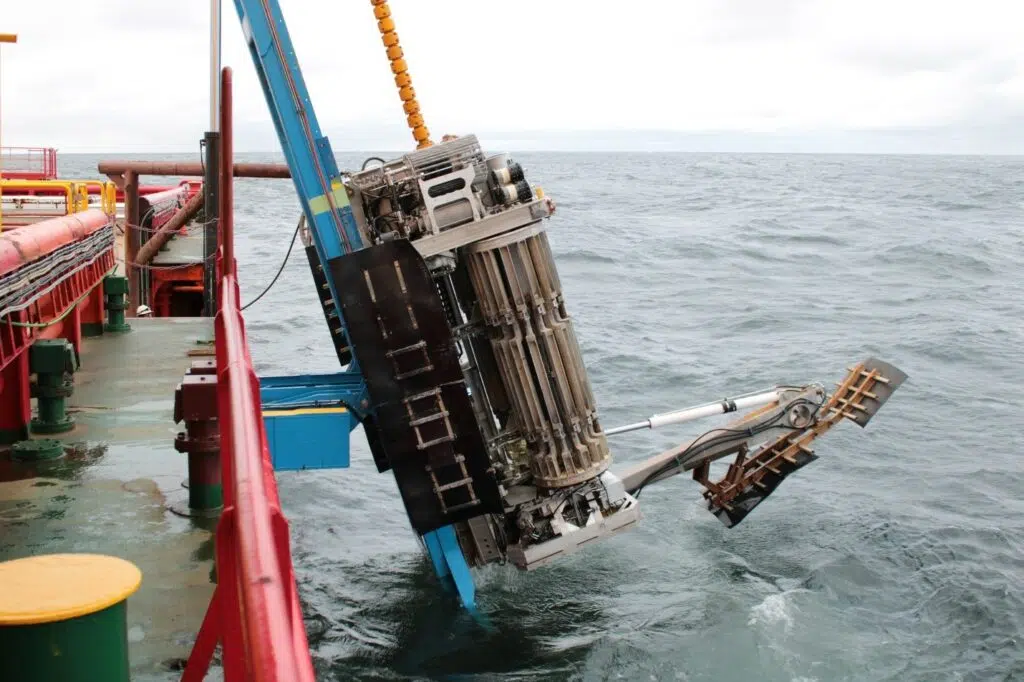
Benthic, a brand in Acteon’s Geo-services business line, was contracted to perform a site investigation consisting of cone penetration tests (CPTs) using its portable remotely operated drill (PROD) for two wind farms offshore Poland in the Baltic Sea. The work for the developments was performed at 22 locations in 45-55 m water depths. The project showcased PROD’s capability to perform in challenging and varying ground conditions.

UTEC, another brand in the Geo-services business line, designed, tested, installed and operated the systems for positioning a pre-piling template on the Baltic seabed followed by monitoring the level, inclination and separation of the four 40 m long and 2.5 m diameter foundation piles driven through the template at 70 locations.
In summary, the Baltic region, especially Poland’s offshore wind market, presents significant growth opportunities. As the country advances its offshore wind journey, Acteon’s tailored solutions enhance reliability, safety and environmental stewardship.
As the country advances its offshore wind journey, Acteon’s tailored solutions enhance reliability, safety and environmental stewardship.